
Property taxes are one of the most misunderstood line items in a Stamford home purchase. Buyers are regularly handed a tax figure — from the listing, a third-party calculator, sometimes the seller — and assume it's accurate. Often it isn't. In Stamford, your annual bill depends on three moving parts: your property's assessed value (set at 70% of a 2022 market estimate, not what you're paying today), the mill rate for your specific taxing district (not a single citywide number), and how the upcoming 2027 revaluation might change both. This page explains all three — with the formula — so you know exactly what to verify before you close.
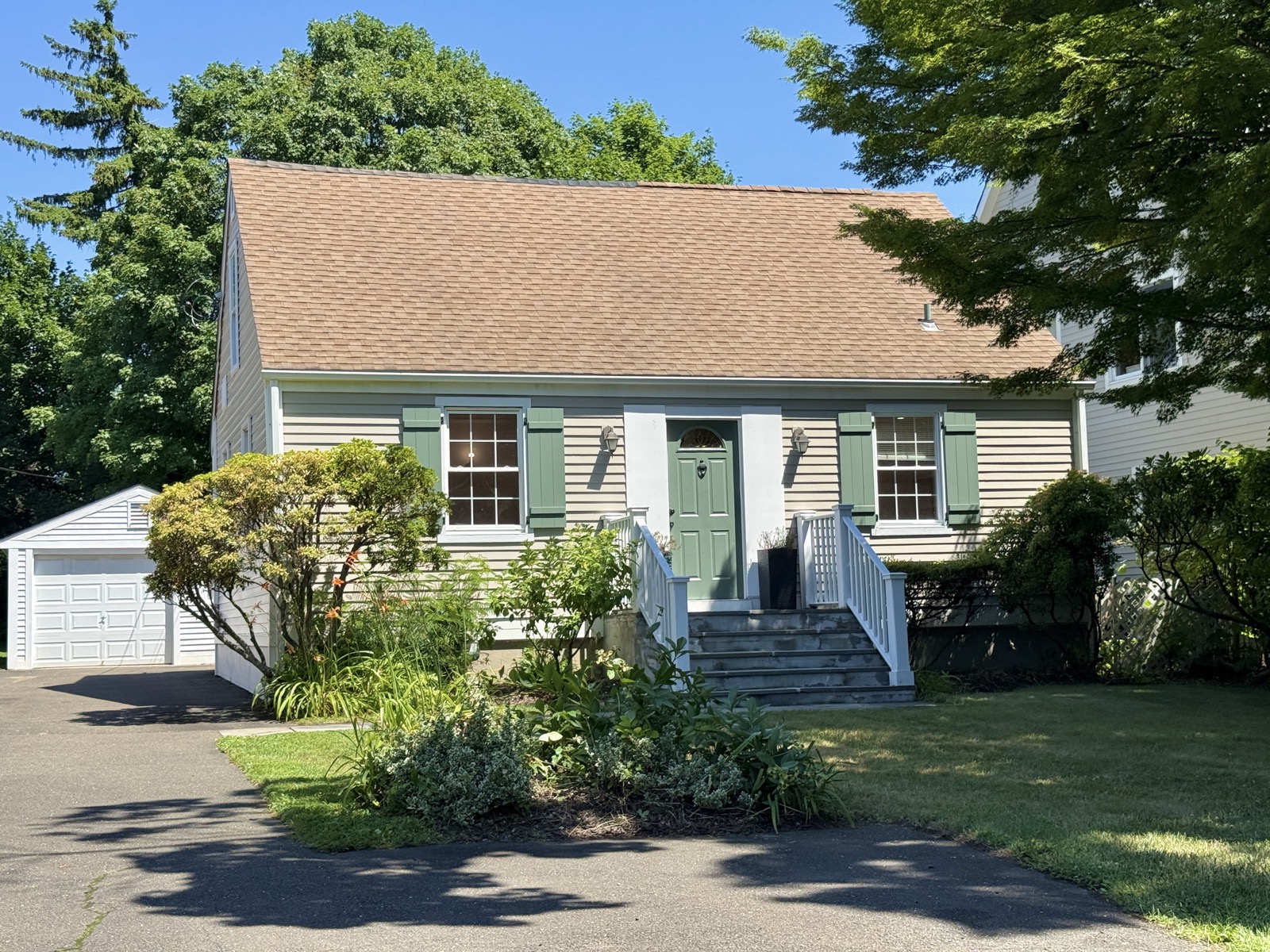
How Connecticut Property Taxes Are Calculated
Connecticut sets the rules; towns set the rates. State law requires every municipality to assess property at 70% of its estimated fair market value. That ratio is fixed statewide — every town, every property, same formula. The resulting number is your assessed value. Multiply it by your town's mill rate — expressed as dollars of tax per $1,000 of assessed value — and you get your annual tax bill.
The formula:
- Assessed Value = Market Value × 0.70
- Annual Tax = (Assessed Value ÷ 1,000) × Mill Rate
As an illustration: a home with a $700,000 assessed market value carries an assessed value of $490,000. At a base rate near 23 mills, the annual tax comes to roughly $11,270. At a 26-mill combined DSSD rate, it's closer to $12,740. These shift every May when the Board of Finance sets new rates — treat them as a framework, not a projection.
Why Assessed Value Is Not the Same as Your Purchase Price
This is where most buyers get tripped up. Connecticut towns only update property assessments during a formal revaluation, required by state law at least every five years. Between revaluations, assessed values are frozen — even if the market moves significantly in either direction.
If you buy in Stamford today, the city does not automatically reset your assessed value to reflect your purchase price. Your assessment stays anchored to the most recent revaluation date — October 1, 2022 — until the 2027 cycle. That creates a meaningful gap between what you paid and what the assessor currently has on file.
For context, Redfin reported a Stamford median sale price near $712,000 for the three months ending May 2026. If assessed values citywide are still keyed to 2022 conditions, buyers today may find their tax bill reflects a market that has since moved — in their favor or against them, depending on how their specific neighborhood tracked relative to the city average in that revaluation. For a current read on where prices stand, see my Stamford market overview.
Stamford's Four Taxing Districts
Here's something most buyers don't learn until the closing disclosure lands: Stamford is not a single taxing jurisdiction. The city is divided into four geographic taxing districts, each with its own mill rate tied to the municipal services that district receives — public sewer, garbage collection, street lighting, and similar infrastructure. A property connected to city sewer in an urbanized part of town pays a different rate than a property on a private well in a quieter outlying area of the same city.
On top of that, properties within the Downtown Stamford Special Service District (DSSD) carry an additional surcharge layered on top of the base district rate. As of the 2024–2025 fiscal year, the combined DSSD rate reached approximately 26–27 mills — meaningfully higher than what applies to most residential properties outside the downtown core. The city's official property assessment page publishes the current rate schedule for each district.
The practical takeaway: a tax figure you heard for one Stamford neighborhood almost certainly does not apply to every address you're looking at. Before you budget, confirm which district the specific parcel falls in. My existing breakdown of Stamford's current property tax rate shows a side-by-side look at recent district rates.
Stamford's Revaluation Cycle and What It Means Right Now
Stamford's most recent revaluation was effective October 1, 2022, replacing values set during the 2017 cycle. The 2022 revaluation produced significant increases for many residential properties, reflecting the sharp appreciation of the prior several years. The next revaluation is currently scheduled for 2027, completing the required five-year cycle.
What that means for anyone purchasing in 2025 or 2026:
- Your tax bill will be based on the 2022 assessed value — not your purchase price and not today's appraised value.
- In 2027, assessed values will be reset citywide to 70% of new estimated market values. The Board of Finance will then set a corresponding mill rate to balance the city budget. Historically, broad value increases lead to rate reductions — but the dollar impact on your specific property depends on how its value changed relative to the citywide average, not on the raw increase.
- If you appeal your assessment and win, the reduction applies to the assessed value in place at the time of the appeal — not to your purchase price.
Understanding this cycle matters when projecting total holding costs over your first few years of ownership. It also factors into how to structure an offer. For more on the buying process in Stamford, see my guide on how to buy a home in Stamford, CT.
How to Estimate Your Annual Tax Bill Without Guessing
The most reliable method is straightforward: pull the actual data for the specific address. Here's how:
- Step 1 — Find the assessed value. Stamford's property records are public and searchable through the city's online assessor database. Look up the address and note the assessed value on the current grand list.
- Step 2 — Confirm the taxing district. The city's assessment office can confirm which of the four districts applies to that parcel — and whether the DSSD surcharge adds on top. This is sometimes visible in the town records database as well.
- Step 3 — Apply the current mill rate. Divide the assessed value by 1,000, then multiply by the district's rate for the current fiscal year. The Board of Finance sets rates each May, so verify you're using the most current figure.
What you should not do: treat the tax figure on the MLS listing, on Zillow, or in a seller disclosure as authoritative without checking the source and date. Listing-sheet tax figures are sometimes outdated, sometimes from the wrong district, and occasionally just wrong. The primary sources take five minutes and remove the uncertainty entirely.
How to Challenge Your Assessment
If you believe your property's assessed value is higher than 70% of its fair market value as of the applicable revaluation date, you have the right to appeal. The process runs in two stages:
- Board of Assessment Appeals (BAA): Applications are typically accepted in February, with a deadline around February 20th. Hearings follow in March. Supporting evidence should be keyed to the revaluation date — October 1, 2022 for the current cycle, not current market conditions. Comparable sales from that period, or an independent appraisal using that effective date, carry the most weight with the board.
- Superior Court: If the BAA doesn't reduce the assessment to your satisfaction, you can file a further appeal in Stamford Superior Court within two months of the BAA's written decision.
Appeals tend to produce results most often immediately after a revaluation, when mass-appraisal models generate the most outliers. If you purchased after October 2022 at a price that implies a market value meaningfully below what the assessor has on file, it's worth doing the math before the February deadline passes.
Get a Real Tax Estimate Before You Make an Offer
Stamford's property taxes are not one-size-fits-all, and online estimates are frequently built on the wrong district rate or a stale assessed value. Your district, your property's current assessed value, and the 2027 revaluation timeline all affect what you'll actually pay — and none of those variables show up reliably in a listing. Before you make an offer on any Stamford address, I can pull the actual assessed value from city records, confirm the taxing district and current mill rate, and give you a written estimate. No ballpark figures, no guesswork. Reach out here and I'll get back to you the same day.
FAQ
What is the current property tax mill rate in Stamford, CT?
As of the 2024–2025 fiscal year, Stamford's base mill rate is approximately 23 mills for most residential areas (District A is 23.36; district rates range from 22.76 to 23.36 for 2024–2025), though it varies by taxing district. Properties in the Downtown Stamford Special Service District face a combined rate near 26–27 mills. The Board of Finance sets a new rate each May, so the figure changes annually. Always confirm the specific rate for the district your property falls in — a citywide average will not give you an accurate estimate.
How is my Stamford property's assessed value calculated?
Connecticut law requires all towns to assess property at 70% of its estimated fair market value as of the most recent revaluation date. Stamford's last revaluation was effective October 1, 2022, so current assessed values reflect 2022 market conditions — not your purchase price or today's market. To estimate your annual tax bill, multiply the assessed value by the applicable district mill rate, then divide by 1,000.
When is Stamford's next property tax revaluation?
Stamford's next revaluation is currently scheduled for 2027, five years after the October 2022 revaluation as required by Connecticut state law. At that point, all assessed values will be reset to 70% of updated estimated market values, and the Board of Finance will set a new mill rate to balance the budget. If you're buying in 2025 or 2026, your taxes will be based on 2022 assessed values until the 2027 update takes effect.